
Terra Incognita
Adrian Coleman
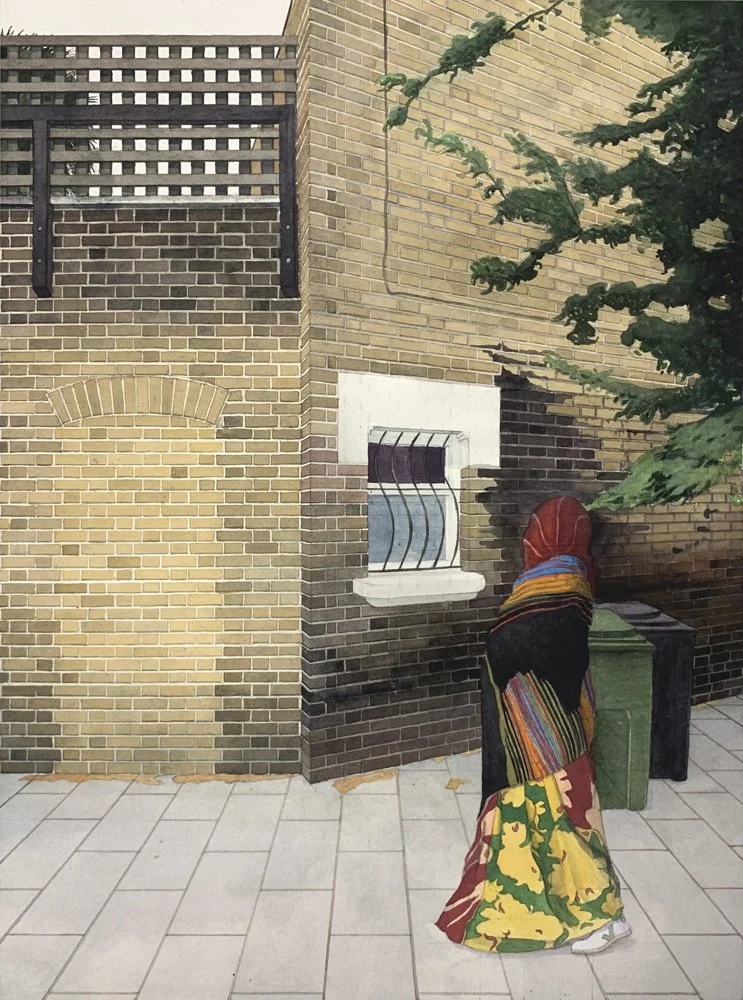
Adrian Coleman makes paintings of solitary figures depicted within austere urban settings. His work considers a fraught relationship to geography, to feel of and outside a place at once. While living in London between 2017 and 2021, Coleman assumed the paradox of being both native and foreign. He had been born in Britain to a multi-ethnic family but grew up in the United States. Coleman channeled this dissonance in the work of his 2021 solo exhibition, “Citizens of Nowhere.” The title, an infamous Theresa May expression, referred to people of expansive backgrounds.
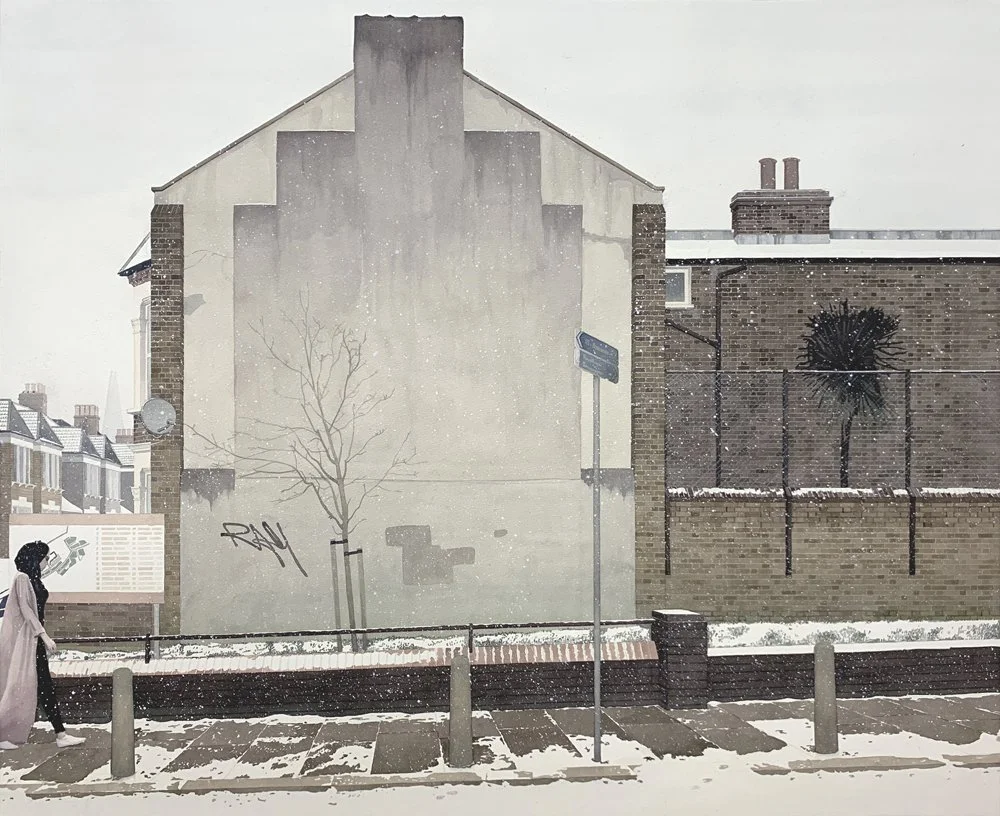
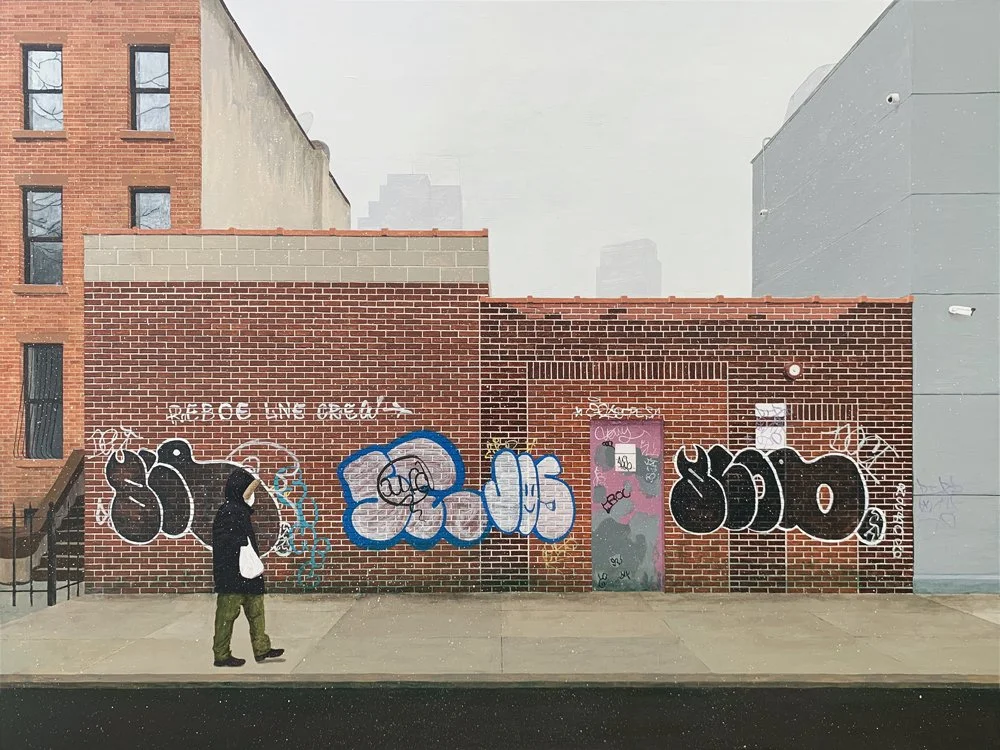
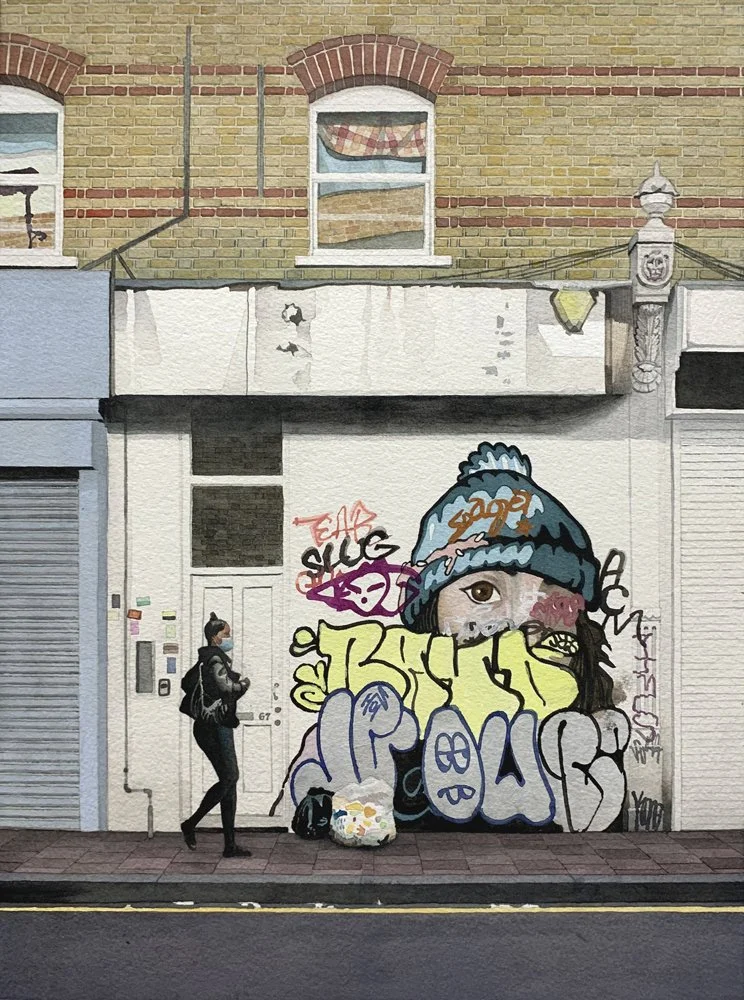
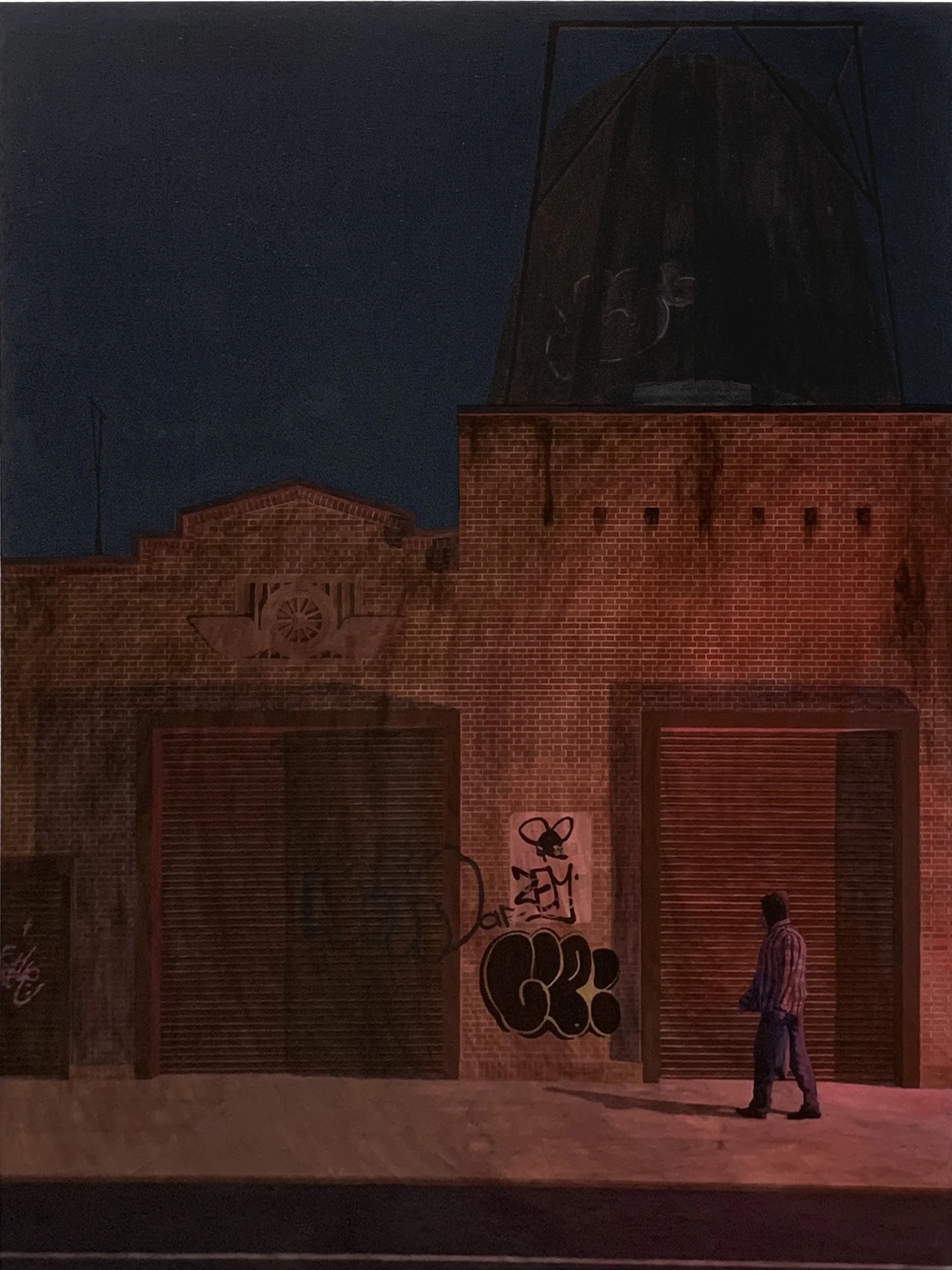
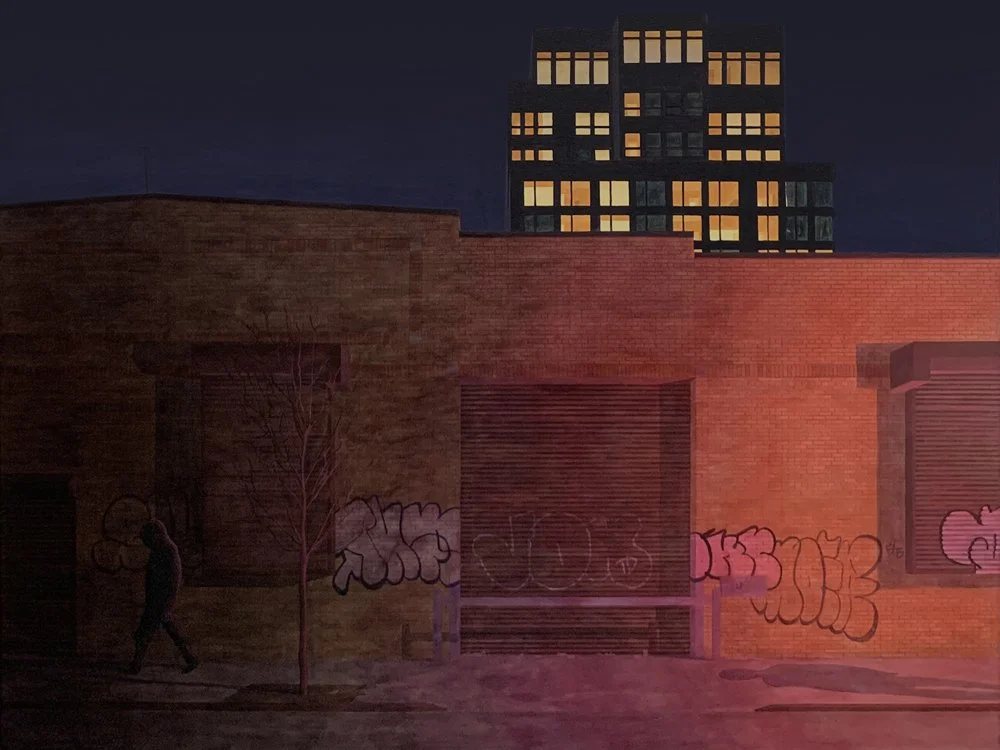
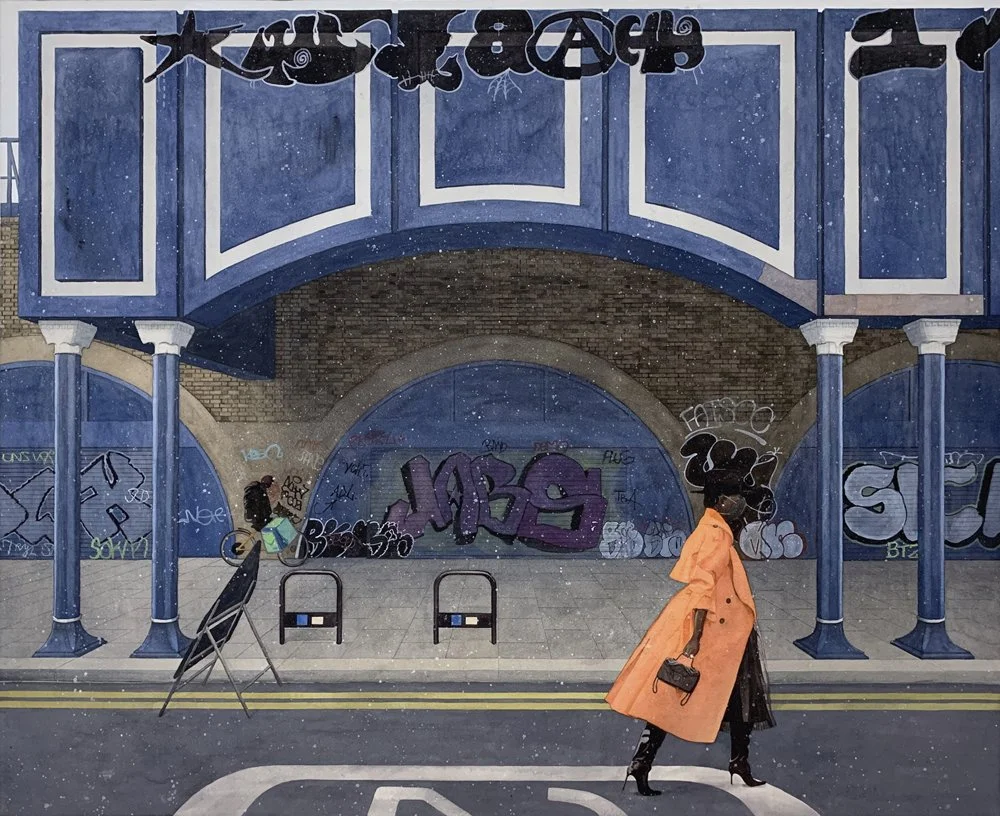
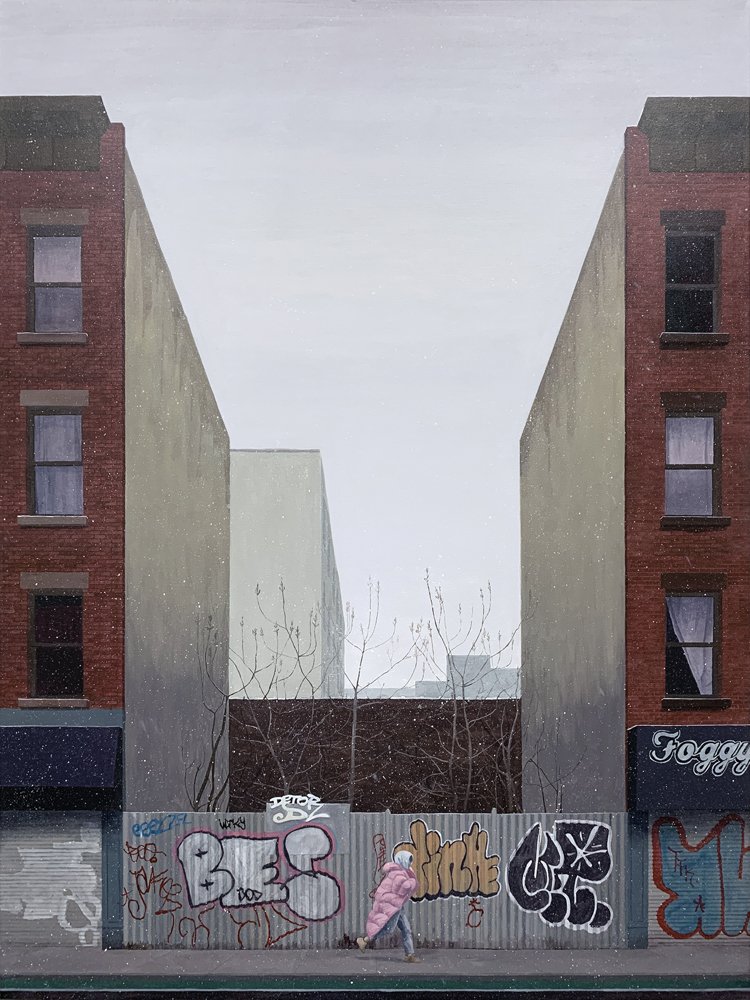
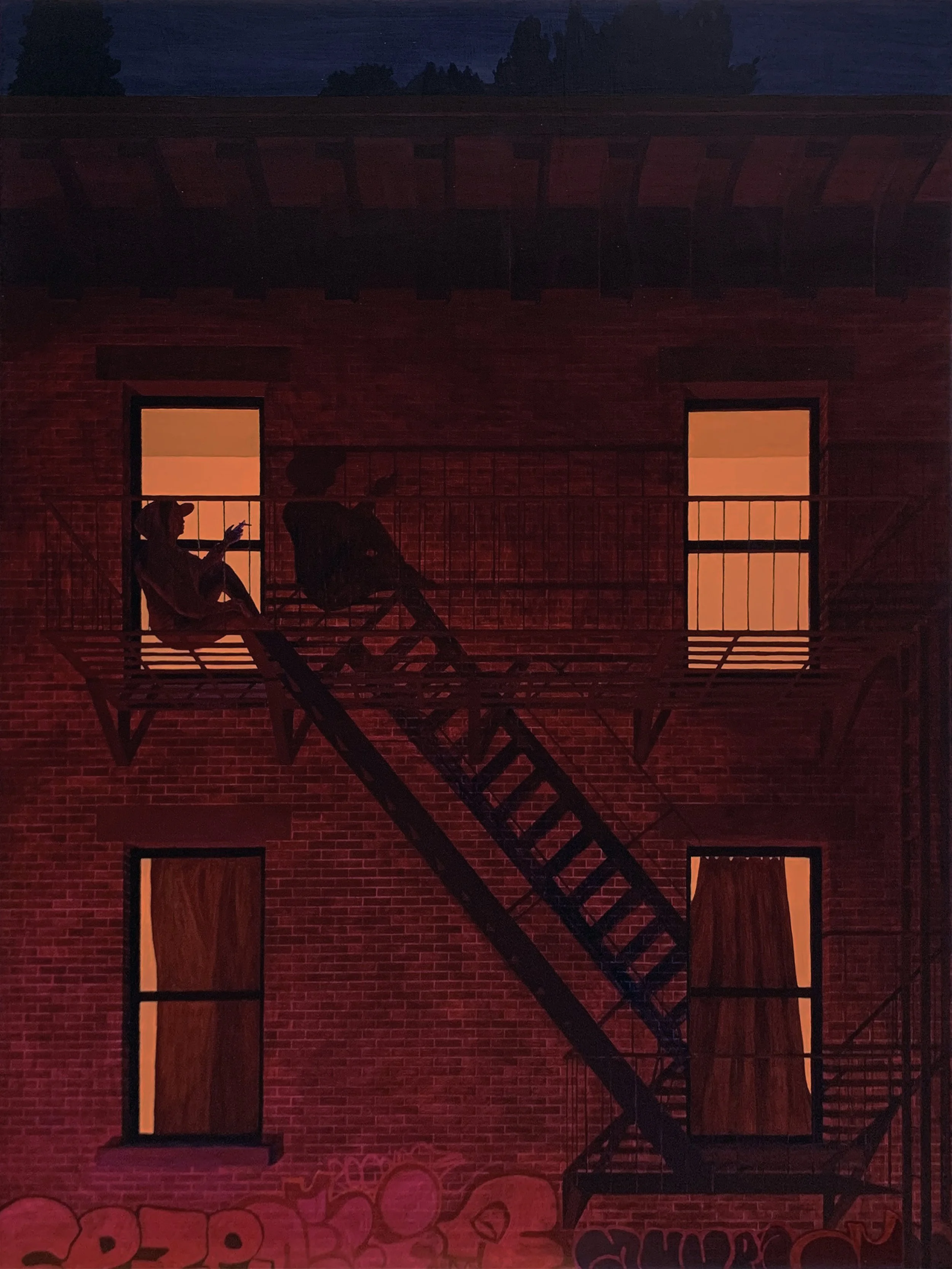
In the same year, Coleman repatriated to New York as the Covid emergency subsided. His subsequent paintings are more pointedly about the limbo of existing between worlds. His latest bifurcated series includes watercolors of Brixton, South London and oil paintings of Gowanus, Brooklyn, both neighborhoods where he has lived and painted. The paintings are an ambivalent meditation on home, both the home where one resides but also the home that one recalls. Simultaneously, the motifs of shuttered storefronts, desolate streets, and masked individuals recur. The paintings are a tableau of a plague and its aftermath. In their conflation of London and New York, they are also a vision of an embattled West.
The binary of the two media encodes the location of each painting. In Europe, Coleman had only made watercolors. This decision was partially informed by the English picturesque tradition, and Coleman’s recent paintings of London, though made in New York, extend this practice. By contrast, Coleman had not used oil paints for years. His reunion with the medium is an estranged reconciliation. The oils also allow Coleman a heightened palette, a deepened chiaroscuro. His Brooklyn nocturnes, bathed in the light of unseen emergency vehicles, are fever dreams. These paintings, though made in situ, conjure a peak pandemic that Coleman experienced largely from abroad. The range of the media's physical characteristics evoke a Covid spectrum, from its pallid stillness to its infrared nightmares.
Coleman’s work exists somewhere between landscape and portraiture. The compositions privilege the scale of cities, but the lone pedestrians appear prominent in their isolation. The genres are most entangled in “Facade” and “God Save the Queen,” where large painted faces adorn exterior walls. Few depicted structures are classical but their representation is balanced and rational. These formal qualities, like the murals, are palled by graffiti. The buildings are obscured by security shutters and shadows, the figures by hoods and respirators. The paintings cohere the people, architecture, and two cities into a shrouded psychological domain, an elegy to the ordered and familiar.
The root of the English word nostalgia is the Greek poetic concept nostos, a song of homecoming or sometimes mournful homesickness. Associated most popularly with the Odyssey, nostos refers not only to a yearning for one’s origins but implicitly a past that may or may not be retrievable. In the eleventh book of the epic, Odysseus visits the realm of the dead to consult a spirit on how he may finally return to Ithaca. Unexpectedly, he confronts the ghost of his mother, who has died during his travels. The home he remembers has become a land of shades. Like Coleman, he will arrive in his country but his excursion into the uncharted, Terra Incognita, will prolong.
Artist Bio
Adrian Coleman (b. 1984) is a British-born American painter of Anglo-Indian Polish-Jewish descent. Raised in New Jersey, he is a proud graduate of Highland Park High School and the Middlesex County Arts High School Program. Coleman studied painting and architecture at Yale University (BA, 2006) and received his masters degree from Columbia University (M.Arch., 2012). Coleman is a winner of the 2012 Brooklyn Museum GO Open Studio Competition. He appeared in the Bronx Museum’s 2015 Biennial and BRIC’s 2016 Brooklyn Biennial. In 2017, Steven Amedee Gallery in Manhattan mounted his solo exhibition “Stratigraphies.”
Later that year, Coleman relocated to the U.K., where he has participated in group exhibitions at the Mall Galleries, Peckham Levels, and the Willis Museum. In 2020, Coleman was awarded the Hopper Prize. In 2021, his show “Citizens of Nowhere” appeared at Taymour Grahne Projects in London.
Back stateside, Coleman has featured in various small group exhibitions while preparing for his second presentation at Steven Amedee Gallery, “Terra Incognita”. His paintings are in the private collections of, among others, Beth Rudin Du Woody and Soho House. By day, Coleman works as an architect for Shapeless Studio in Brooklyn.




Quisque iaculis facilisis lacinia. Mauris euismod pellentesque tellus sit amet mollis.